Light as a Living Material
Origins
I didn’t come to making light sculptures through design school or by deciding I wanted to be a “lighting artist.” It grew out of the same life that shaped my music: working with my hands, listening closely to materials, and following curiosity wherever it led.
For most of my life I’ve been a percussionist and composer. That means I’m used to thinking in terms of touch, resonance, rhythm, phrasing, and space. Sound is physical. It breathes out of wood, metal, skin, air. When I started building objects in my studio — first instruments, then furniture, then small constructions that had no clear category — I realized I was still doing the same thing. I was composing, but with form and material instead of time.
⸻
Finding the Voice of Light
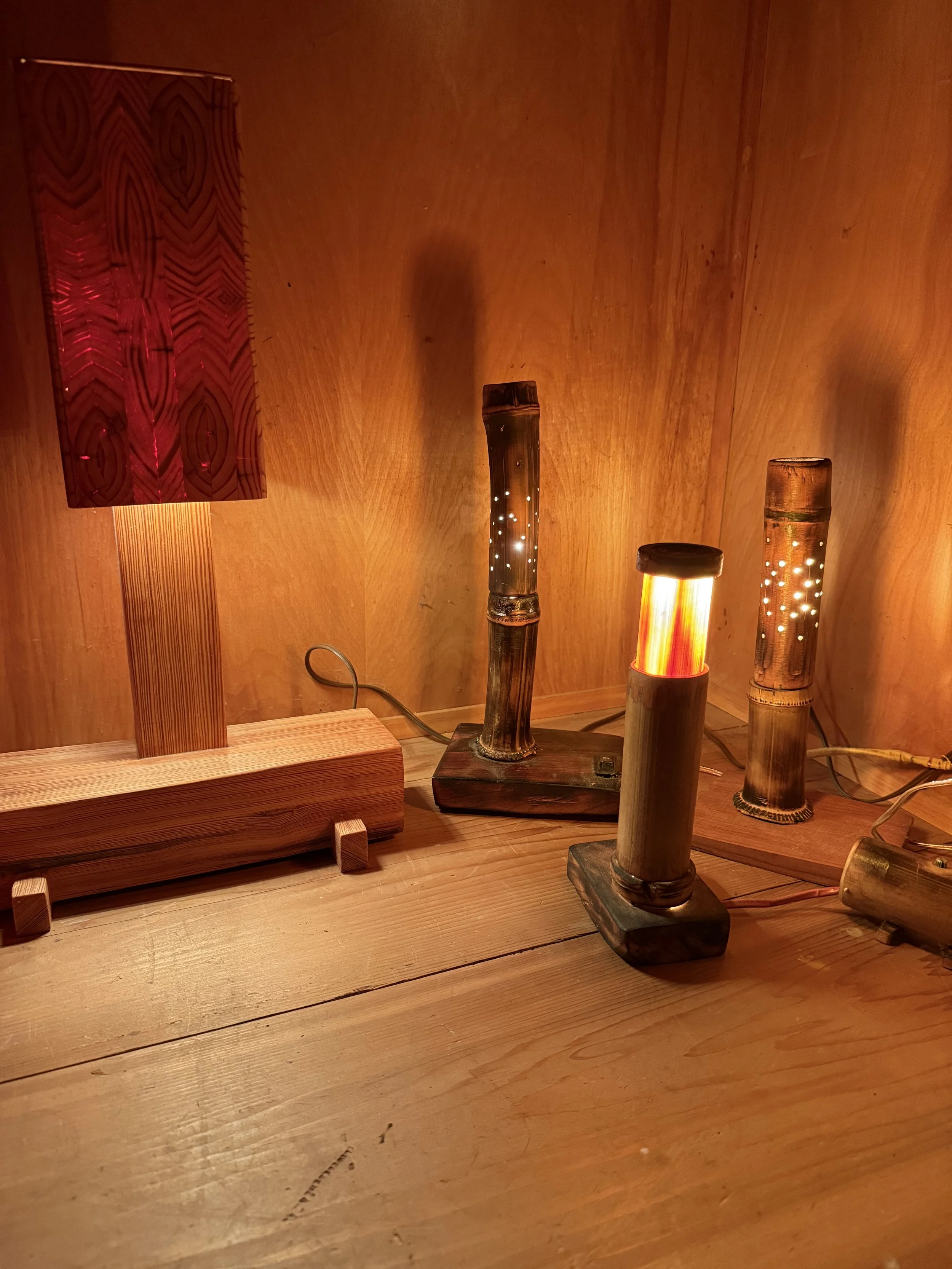
Light entered the picture in a very natural way. I was already making sculptural objects out of reclaimed wood, bamboo, and other found materials. At some point I wanted them to speak. Not just to sit there and be looked at, but to emit something — the way an instrument does when it’s played. To illuminate not only the space around them, but something inward and less visible.
Light became that inner voice.
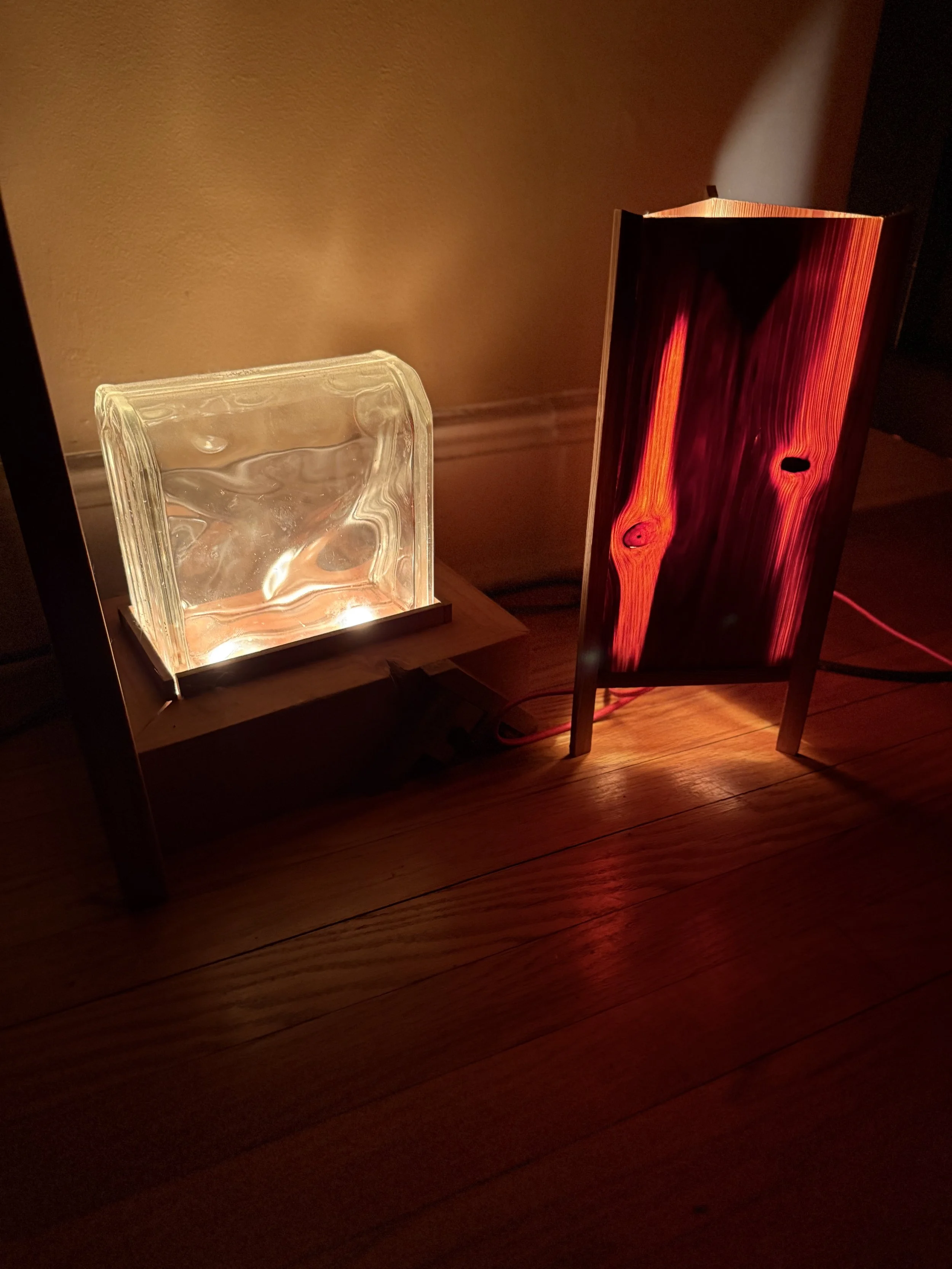
What interests me is not illumination in the practical sense. It’s not about making a lamp to light a room. It’s about how light moves through a form, how it reveals grain, edges, layers, shadow. Light is another material. It has color, temperature, intensity, diffusion. It can be quiet or it can be sharp. It can breathe.
⸻
Material as Collaborator
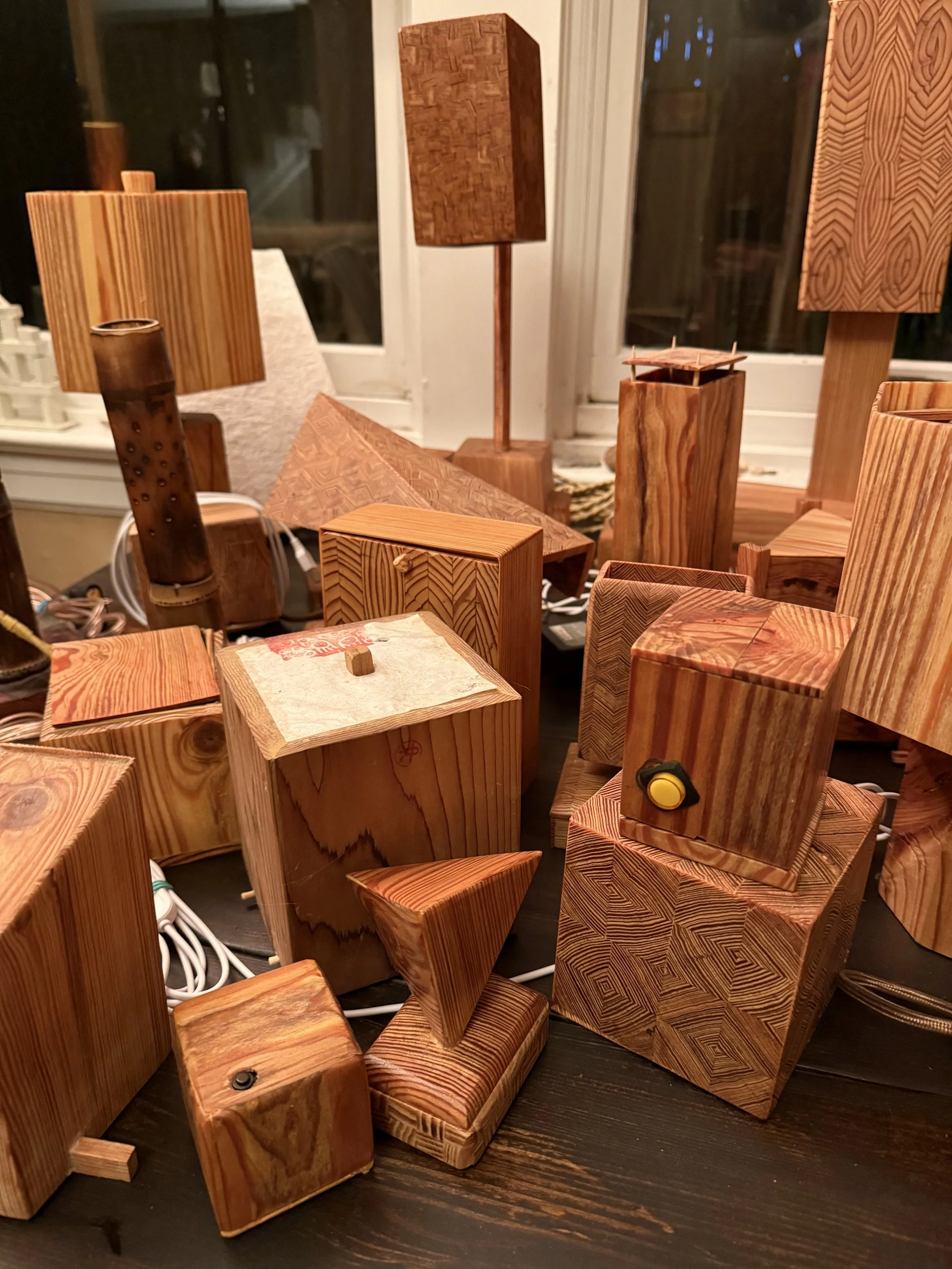
The wood I use is never neutral. Much of it is reclaimed: longleaf pine, old structural beams, offcuts, pieces that already have a history in them. These materials have lived a life before they reach my studio. They carry time — in their density, their resin, their imperfections. When I cut into them, I’m collaborating with something that already has a story.
I work slowly and by hand as much as possible. Cutting, shaping, joining, sanding, finishing. The process is physical and direct. I want to feel where the form is going rather than impose a fixed plan. Sometimes a piece begins with a very clear geometric idea. Other times it begins with a fragment of wood that suggests a direction.
In the bamboo world you learn quickly that the material is the teacher. It tells you how it wants to be cut, how it wants to bend, where it will split. Wood is the same. Light, too, has its own behavior. You don’t control it — you shape the conditions for it to appear.
⸻
The Inner Architecture
I often think of these pieces as small architectures. They have an inside and an outside. They hold space. Some of them feel like shrines. Some feel like tools. Some feel like instruments that don’t make sound.
The electronics come in almost like a second phase of the composition. I’m not interested in hiding them completely, but I also don’t want them to dominate. The circuitry is there to serve the light the way a drumhead serves vibration. Power sources, resistors, filaments, LEDs — they’re all chosen for their behavior, not just their function. How warm is the light? How flexible is the filament? How does it sit inside the structure?
Technology is a quiet partner. The goal is not to make something high-tech or futuristic. It’s to make something immediate and alive — a light that feels like an ember rather than a spotlight. Often the power is contained within the piece so it can exist independently, a self-contained small world.